IxDF — From Research to Prototype
A full UX research and design process applied across two IxDF courses — from heuristic evaluation and user interviews through empathy maps, ideation and prototyping, following the complete Design Thinking methodology.
Interaction Design Foundation
2 courses · 2 certificates awarded
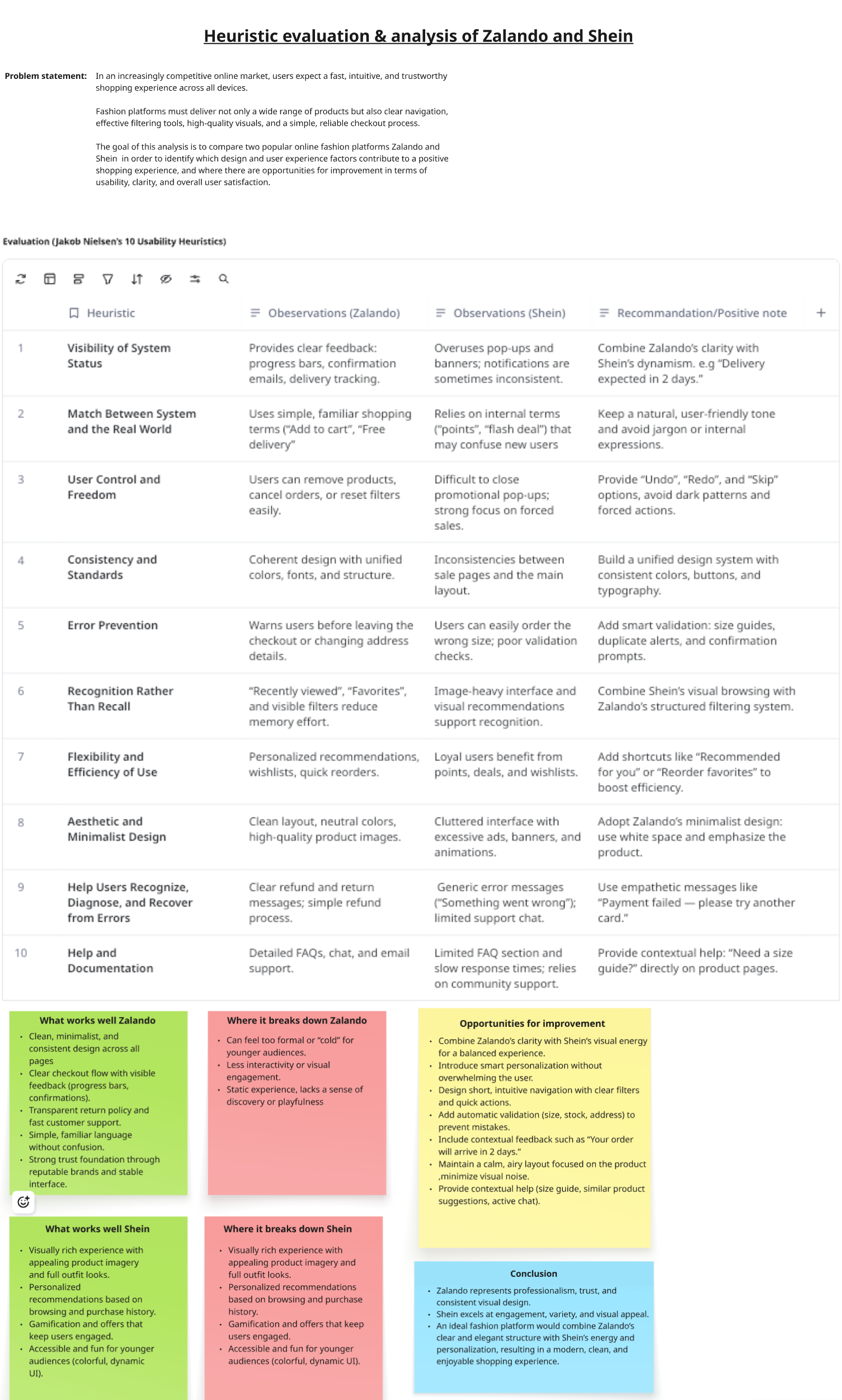
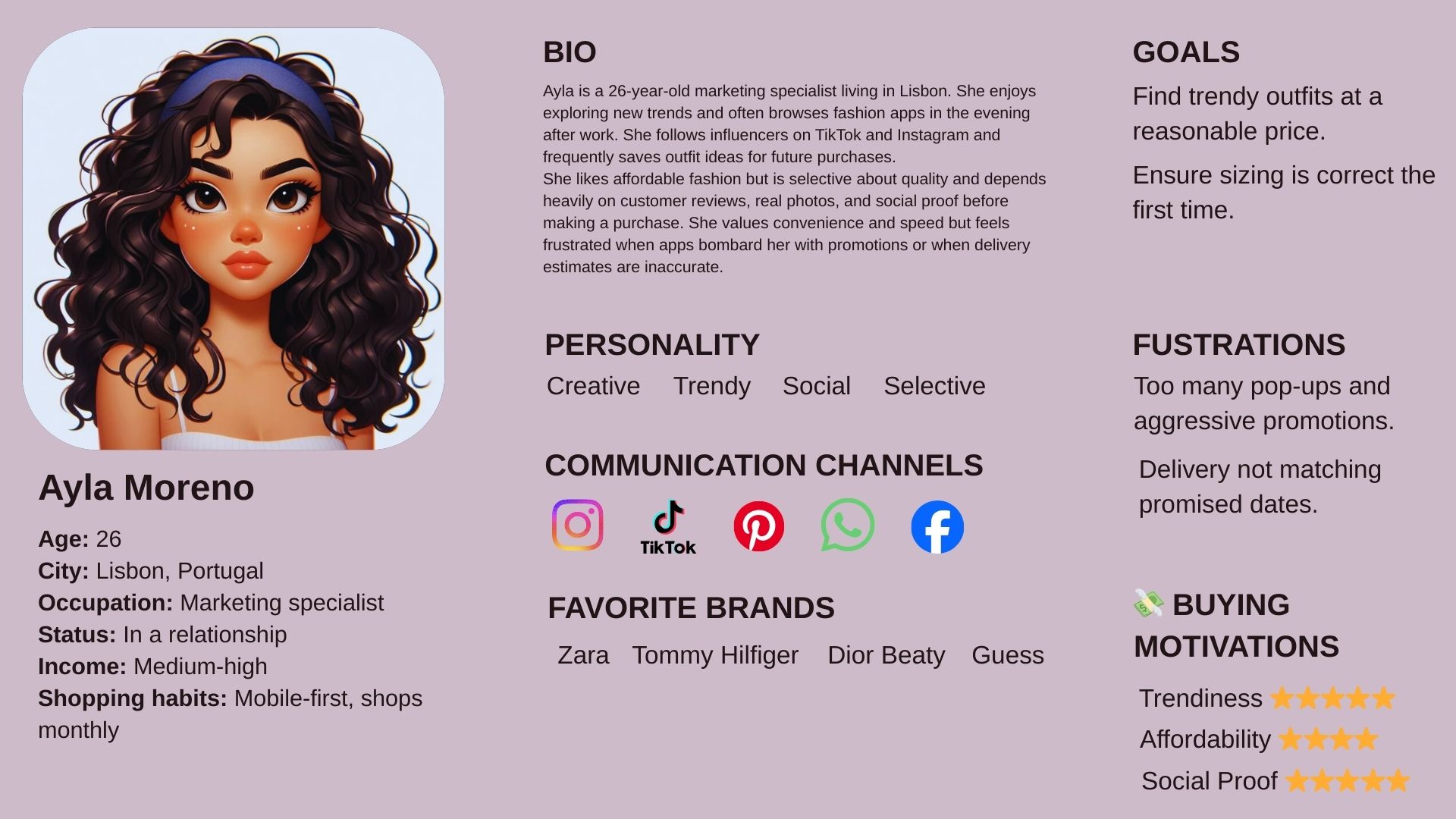
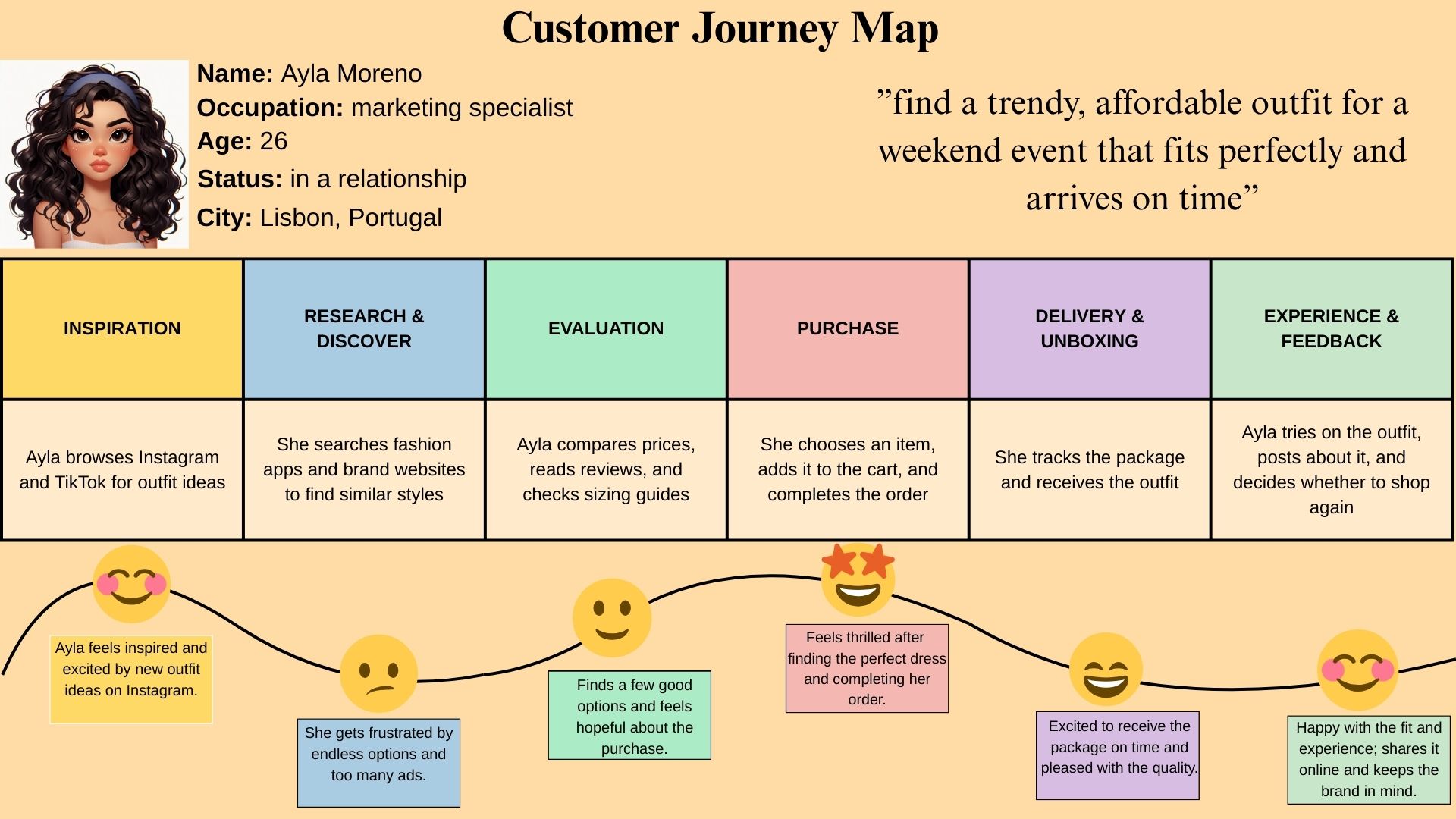
The first phase focused on understanding users of fashion e-commerce platforms. I conducted a heuristic evaluation of Zalando and Shein, built a user persona, ran structured user interviews, and mapped the full customer journey.
Problem statement
Users expect a fast, intuitive and trustworthy shopping experience across all devices. Fashion platforms must deliver clear navigation, reliable filtering, high-quality visuals and a simple checkout.
Audience
Ages 18–30. Predominantly female. Tech-comfortable users with limited budgets who frequently buy clothing online.
Objective
Compare Zalando and Shein to identify which UX factors drive a positive shopping experience and where each platform breaks down.

Key findings
- 1Users choose Shein mainly for low prices and variety; price outweighs trust and product accuracy.
- 2Product information is unreliable; users trust customer photos and reviews, not official descriptions.
- 3Delivery delays are common and reduce satisfaction, even when product quality is acceptable.
- 4The interface feels overwhelming and manipulative; pop-ups, banners and constant discounts interrupt the experience.
- 5Price inconsistencies lower trust; users notice when the product-page price differs from the cart.
Raluca · 22 · Cluj
"There's no cash-on-delivery option and shipping takes too long. The interface feels too crowded with ads and pop-ups; I'd prefer a cleaner layout."
Roxana · 23 · Oradea
"I'd make sure the prices are consistent: the same on the product page and in the cart. I trust customer photos and reviews more than the descriptions."
The second phase applied the full design thinking process to a new product concept: a calm, minimal fitness app for users with low energy and decision fatigue. I built empathy maps, ideated solutions and developed a prototype storyboard.
Starting from "How might we help users start exercising without additional mental effort?", I intentionally generated bad ideas, then reversed each one to surface a positive direction aligned with user needs.
| Problematic idea | Positive direction |
|---|---|
| Mandatory 45-minute workout | Short workouts (3–10 minutes) |
| Public leaderboard | Private, personal progress tracking |
| Aggressive messaging | Calm and empathetic tone |
| Complicated setup | One-tap start |
| Complex manual selection | Automatically generated workouts |
| Penalty for missed days | No penalty for breaks |
| No adaptation | Daily energy check |
| Overloaded interface | Minimalist design |
Outcome: the appropriate solution is a minimalist, calm fitness app focused on emotional support rather than competition or maximum performance.
Common assumption
- · Users need strong motivation to exercise.
- · Long workouts are more effective than short ones.
- · Consistency requires discipline and strict structure.
- · Users are motivated by competition.
- · Missing a workout reduces progress.
- · More features mean more value.
"What if?"
- · What if users don't lack motivation, but lack energy?
- · What if short workouts are more sustainable long-term?
- · What if flexibility creates more consistency than discipline?
- · What if competition increases anxiety rather than engagement?
- · What if missing a workout shouldn't reset progress?
- · What if fewer features increase usability?
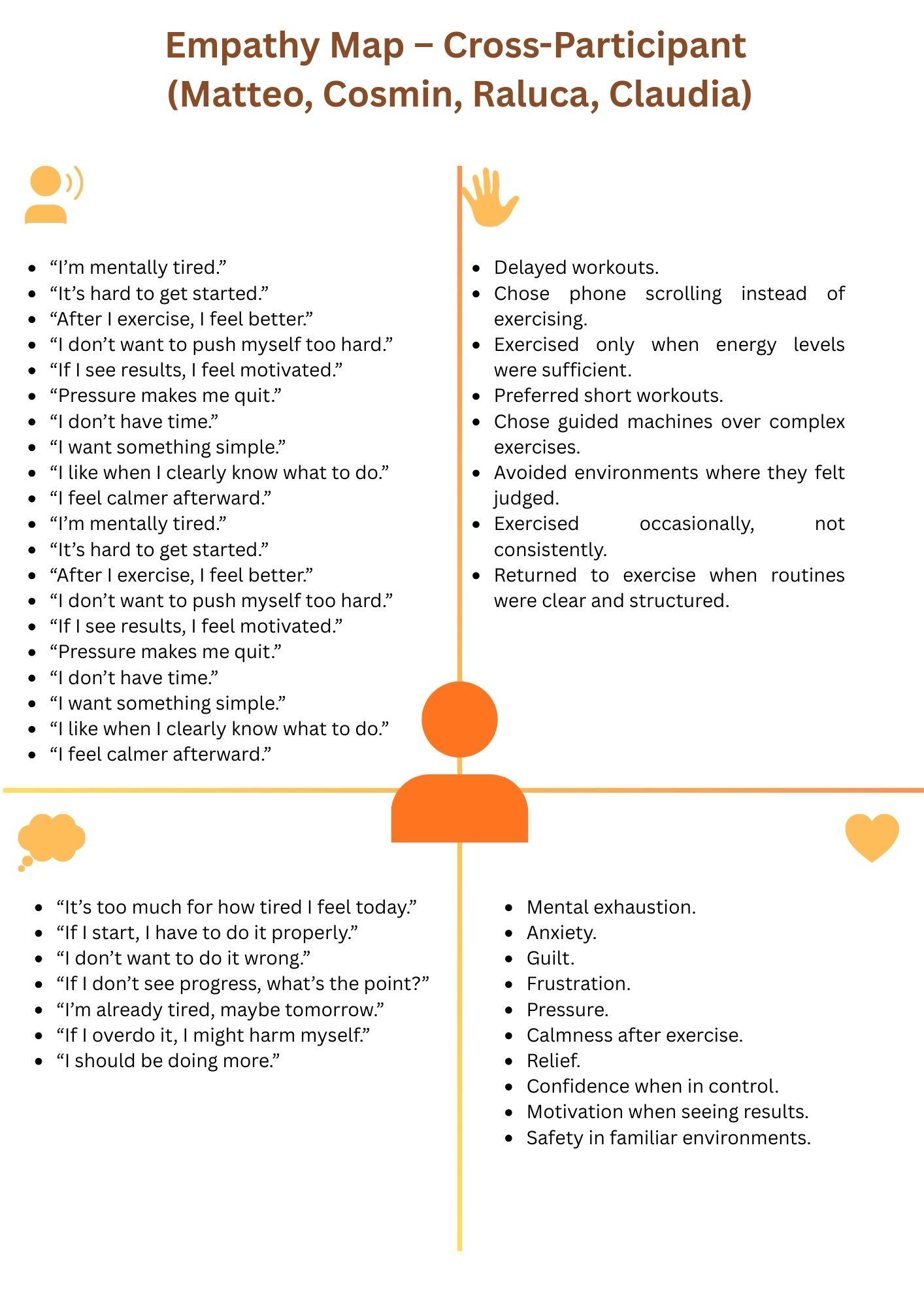
Empathy Map 1
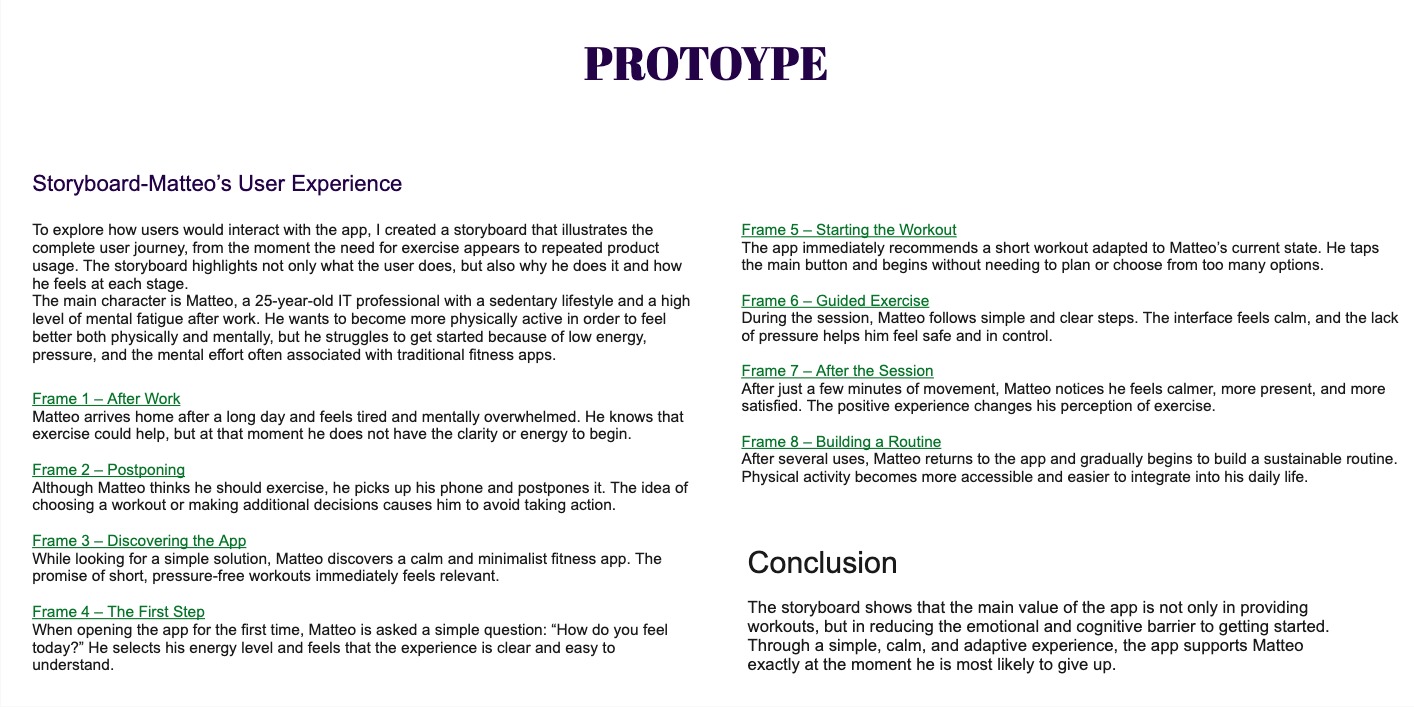
Storyboard · Overview


Want to discuss this project?
Get in touch